
Ionospheric disturbances from solar flares modeled as possible secondary triggers for large earthquakes
Monday, February 9, 2026
A team of scientists from Kyoto University has developed a capacitive-coupling model linking the ionosphere and Earth’s crust, showing that enhanced electron density during strong solar-flare activity could induce measurable electrostatic pressure inside fractured rock. The findings, published February 3, 2026, suggest space-weather disturbances may act as an additional stress factor when faults are critically loaded.
The Kyoto University research group led by Akira Mizuno, Minghui Kao, and Ken Umeno has published a quantitative model describing how disturbances in the ionosphere can exert electrostatic stress inside Earth’s crust when faults are already near failure.
The paper, published online on February 3, 2026, in the International Journal of Plasma Environmental Science and Technology (Vol. 20, e01003), introduces a capacitive-coupling mechanism linking the ionosphere, the ground surface, and electrically charged fractured zones deep within the crust.
This study extends the team’s earlier work (2024–2025) on ionospheric descent and voltage generation within charged fracture zones, forming the third paper in a continuing series on ionosphere–crust coupling.
In the new analysis, crustal fracture zones filled with high-temperature, high-pressure water, potentially in a supercritical state, act as natural capacitors.
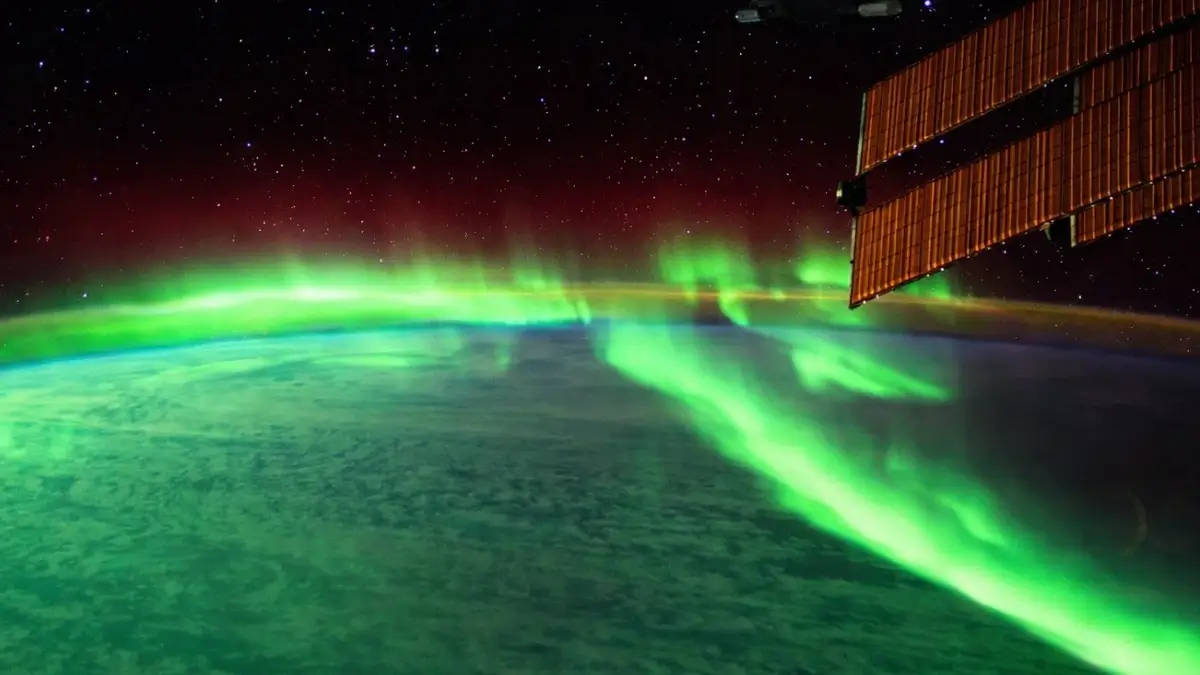
The zones can accumulate electric charge through ion precipitation, establishing an electric field that extends upward to the ionosphere. Enhanced solar activity, particularly X-class solar flares, increases electron density in the lower ionosphere, creating a negative space-charge layer that interacts capacitively with the charged crustal region beneath.
The authors derived quantitative relationships between ionospheric charge and crustal pressure. They estimate that ionospheric disturbances may generate electrostatic pressures inside nanometre-scale voids within fractured rock — comparable to tidal and gravitational stresses, which are known to modulate the timing of earthquake rupture.
When solar flares enhance ionospheric electron density, capacitive coupling transmits an additional electric field into the crust, producing mechanical pressure within the void network.
At mid-latitudes around 35° N, where the 2024 Noto Peninsula earthquake occurred, intense solar flares have been observed to raise TEC by more than 90 units. The authors note that during the 2024 Noto event, a strong flare was recorded by the National Institute of Information and Communications Technology early that morning. While temporal coincidence does not confirm causality, the timing is consistent with the proposed electrostatic-coupling mechanism.
The research does not claim that solar activity can predict or directly cause earthquakes. It proposes that space-weather-driven ionospheric charge variations may contribute an incremental stress term that helps tip already strained faults into rupture. Regions far from critical stress thresholds would remain unaffected.
The team suggests integrating GNSS-based ionospheric tomography, space-weather indices from agencies such as the NOAA Space Weather Prediction Center, and subsurface geophysical data to evaluate conditions under which ionospheric disturbances might influence crustal stress. Future interdisciplinary work is expected to refine the quantitative relationship between ionospheric charge distribution, crustal dielectric properties, and local seismic response.
By bridging plasma physics and geophysics, the Kyoto University model reframes earthquakes as processes potentially sensitive to near-Earth space conditions. The approach may open a new observational window for understanding earthquake initiation without departing from established tectonic theory.
References:
1 Possible mechanism of ionospheric anomalies to trigger earthquakes – Electrostatic coupling between the ionosphere and the crust and the resulting electric forces acting within the crust – International Journal of Plasma Environmental Science and Technology – Akira Mizuno et al. – February 2026 – https://doi.org/10.34343/ijpest.2026.20.e01003