
Over 470 Wildfires Burning Out of Control in Canada; Experts Blame Climate Change
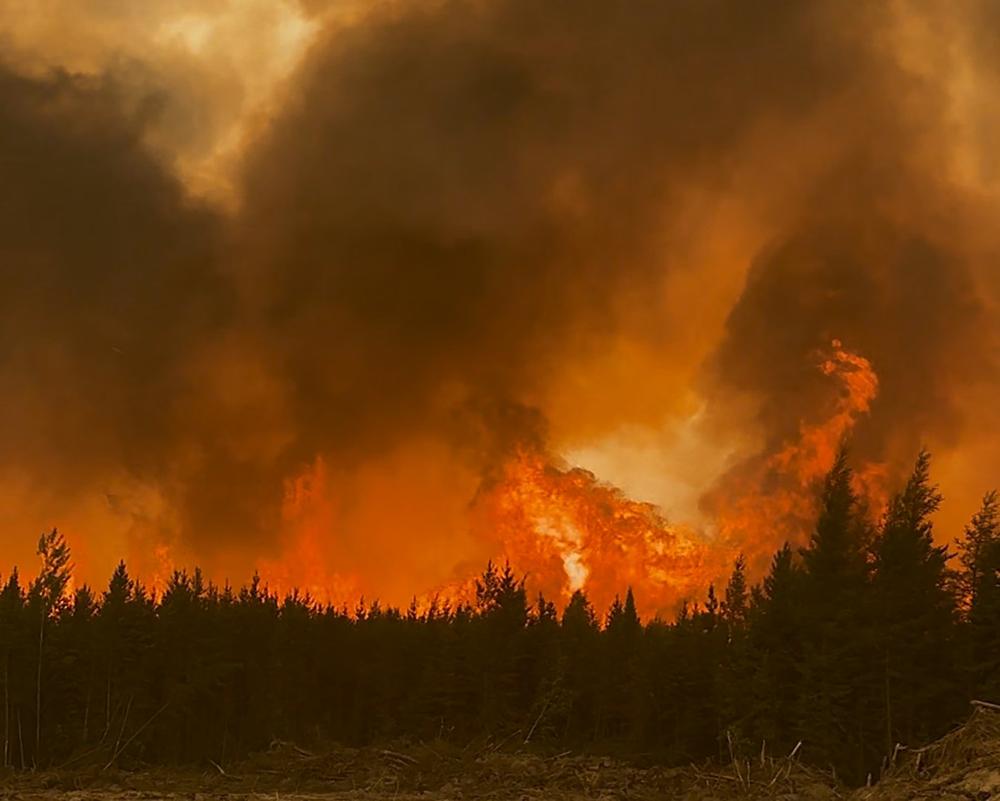
Canada is facing one of its worst wildfire seasons on record in 2025, with hundreds of fires raging out of control. Scientists say climate change is making fires burn longer and more intensely, causing greater damage, more evacuations, and smoky skies. Right now, more than 470 wildfires across the country are considered “out of control,” the Canadian Interagency Forest Fire Centre (CIFFC) reports. So far this year, wildfires have burned about 7.3 million hectares of land — nearly 78% more than the five-year average of 4.1 million hectares.
The 2025 wildfire season is already the second-worst in Canadian history, trailing only the record-shattering 2023 season that burned more than 17 million hectares. Experts warn the fires will continue to threaten air quality across North America for days.
“This is our new reality… the warmer it gets, the more fires we see,” said Mike Flannigan, BC research chair for predictive services, emergency management and fire science at Thompson Rivers University.
A June report from United Nations University in Japan called the 2025 wildfires a “stark manifestation” of climate change, noting that warm, dry spring weather pushed temperatures 2.5°C above average.
Flannigan explained that higher temperatures lengthen the fire season, increase lightning strikes, and dry out vegetation, creating perfect conditions for fires to ignite. “When more material is dried out and ready to burn, the flames are bigger, the fires are more intense, and they can become nearly impossible to put out,” he said.
Thirteen communities in north-west Saskatchewan — many of them First Nations — remain under evacuation orders, the province said. One of the hardest-hit areas is Denare Beach, a village in the province’s northeast that was largely destroyed by fire in June.
The wildfire crisis has now reached Canada’s east coast, with fires burning in Newfoundland and Labrador and multiple towns ordered to evacuate.
John Abatzoglou, a professor of complex systems management at the University of California, Merced, and co-author of a June report from United Nations University, said 2025 marks the third straight year of above-average wildfire activity in Canada.He noted that the fires are not only forcing evacuations but also sending vast plumes of smoke into the United States, triggering severe air quality warnings in several states this month.
Abatzoglou said the fires have taken on an international dimension, with their effects stretching far beyond Canada’s borders.
“This is a key difference from other natural hazards — their ability to affect everything from quality of life to human health and even mortality,” he said.
He warned that governments and public health agencies will need to prepare for more “smoke days,” when people are advised to stay indoors. Communities without effective air filtration systems, he added, will need more resources to keep residents safe during periods of heavy smoke.
Highlights
1. Canada Faces Worst Fires Since 2023
The 2025 wildfire season is already the second-worst on record, with more than 7.3 million hectares burned and over 470 fires still out of control.
2. Hotter, Drier, and Harder to Stop
Experts say climate change is making fires burn longer, spread faster, and become much harder to control.
3. Thousands Forced to Leave Homes
Mass evacuations are underway, especially in Saskatchewan and Manitoba, which together make up nearly 60% of the burned land this year.
4. Fires Stretch From West to East
Communities like Denare Beach in Saskatchewan have been destroyed, and new fires are hitting Newfoundland and Labrador.
5. Smoke Spreads Across Borders
Thick smoke from Canadian wildfires is reaching the U.S., causing dangerous air quality and raising concerns about how to keep people safe during “smoke days.”
Reference: Guardian
Lorem ipsum dolor sit amet, consectetur adipiscing elit. Ut elit tellus, luctus nec ullamcorper mattis, pulvinar dapibus leo.